
Spinning Positions and Training Plans: A Comprehensive Overview
Four main grips exist: vertical hand placement, palm grip on curves, hands on horns for out-of-saddle, and the mountain climber—a challenging, resistance-focused position.
Spinning, a dynamic indoor cycling workout, offers a low-impact cardiovascular experience suitable for diverse fitness levels. It mimics outdoor cycling, allowing for varied intensity through resistance adjustments and simulated terrains. Understanding proper technique and body positioning is crucial for maximizing benefits and preventing injury. Several hand positions are utilized during a spinning session, each engaging different muscle groups and simulating varied cycling conditions.
These positions include a vertical hand placement, a palm grip on the handlebar curves, and a grip on the handlebar horns—primarily used during out-of-saddle climbs. The mountain climber position, involving a simulated uphill climb with significant resistance, further enhances leg and thigh toning while promoting core engagement and allowing for back and arm relaxation during specific phases. Utilizing online resources, like YouTube videos, can supplement training.
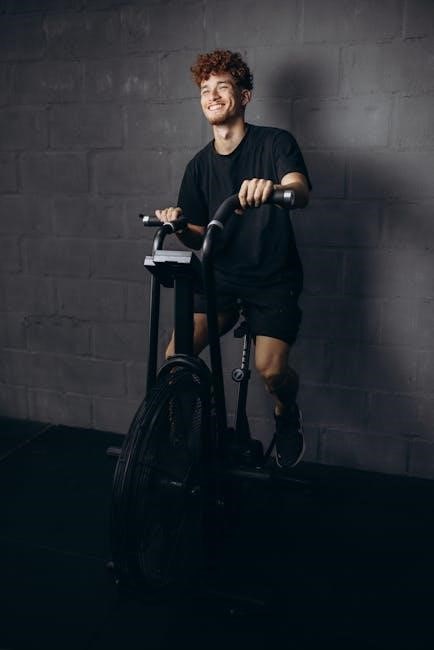
The Benefits of Spinning for Muscle Toning and Endurance
Spinning delivers comprehensive muscle toning, particularly in the legs and thighs, through consistent pedaling and varied resistance levels. The mountain climber position specifically targets these areas, demanding a powerful and sustained pedal stroke. Simultaneously, spinning enhances cardiovascular endurance, improving heart health and stamina. Core muscles are actively engaged throughout the workout, contributing to overall stability and strength.
Interestingly, specific phases of spinning allow for relaxation of the back and arms, preventing overuse and promoting recovery. Proper form, guided by a trainer, is essential to maximize these benefits and avoid strain. Personalized training plans, whether created at home or utilizing online resources, can be tailored to individual fitness levels and goals, ensuring progressive overload and continued improvement.
Understanding the Core Principles of Spinning Technique
Mastering spinning technique hinges on proper hand positioning, encompassing vertical placement, palm grips on handlebar curves, and utilizing the horns during out-of-saddle climbs. The mountain climber position demands a focused back-and-forth pelvic movement against strong resistance, effectively toning legs and thighs while encouraging relaxation in the back and arms.
Correct bicycle positioning is paramount, addressing any postural imbalances like improper seat height or excessive widening of the legs. Maintaining proper posture throughout the session prevents discomfort and maximizes efficiency. A skilled trainer’s guidance is invaluable for refining technique and ensuring adherence to safe and effective practices, especially when navigating varied resistance and positions.

Spinning Positions: A Detailed Breakdown
Explore distinct hand placements: vertical on the shaft, palm grips on curves, and atop the horns for powerful, out-of-saddle climbs—each impacting muscle engagement.
Position 1: Vertical Hand Placement
The foundational grip involves hands positioned vertically on the handlebar’s horizontal axis, close to the central stem. This position encourages a neutral wrist alignment and relaxed shoulder posture, serving as a comfortable starting point for various spinning intensities. It’s ideal for maintaining control during flat road simulations or moderate climbs.
This grip minimizes strain, allowing riders to focus on leg power and cadence. It’s particularly useful for beginners learning proper form and building endurance; Maintaining a slight bend in the elbows is crucial to absorb road vibrations and prevent locking of the joints. Consistent use of this position builds a solid base for exploring more dynamic hand placements during advanced spinning routines.
Position 2: Palm Grip on Handlebar Curves
The palm grip, utilizing the curved sections of the handlebar, promotes a semi-flexed arm position, offering increased control and stability. This placement naturally engages the core muscles, contributing to a more balanced and efficient pedal stroke. It’s well-suited for simulating rolling hills or sustained climbs, allowing for greater leverage and power transfer.
Maintaining a relaxed grip is key; avoid squeezing too tightly, which can lead to forearm fatigue. This position encourages a more athletic posture, facilitating a deeper connection between the upper body and the cycling motion; It’s a versatile grip, adaptable to varying resistance levels and riding styles, enhancing overall spinning performance.
Position 3: Hand Placement on Handlebar Horns (Out-of-Saddle Position)
Position 3, utilizing the handlebar horns, is primarily employed during out-of-saddle climbs, demanding significant power and endurance. This grip provides maximum leverage, enabling a forceful and sustained pedal stroke. It’s crucial to maintain core engagement to stabilize the body and prevent excessive swaying. The out-of-saddle position effectively targets leg and glute muscles, enhancing lower body strength.
Experienced spinners often use this position strategically, incorporating it into intervals or challenging climbs. Proper form is paramount; avoid rounding the back and maintain a controlled descent and ascent. A trainer’s guidance is beneficial to ensure correct technique and prevent injury during this demanding phase of the workout.
The Mountain Climber Position and its Benefits
The Mountain Climber position simulates a challenging uphill climb, requiring substantial effort and activating multiple muscle groups. The pelvis slides backward while maintaining a strong resistance, demanding a powerful and prolonged pedal stroke. This position intensely tones the legs and thighs, while strategically allowing for relaxation of the back and arms.
It’s vital to adjust the intensity based on a trainer’s guidance, as group fitness classes may not always provide personalized feedback on training limits. This position builds both cardiovascular endurance and muscular strength, offering a comprehensive workout. Focus on controlled movements and proper form to maximize benefits and minimize risk of injury.

Creating Effective Spinning Training Plans
Leverage online resources like YouTube for virtual spinning classes, or design personalized home workouts using provided guidelines and tables for optimal results.
Utilizing Online Spinning Resources (YouTube Videos)
Numerous spinning resources are readily available on platforms like YouTube, offering a convenient and accessible way to incorporate structured workouts into your routine. These virtual classes cater to diverse fitness levels, from beginner-friendly sessions to advanced, high-intensity challenges.
YouTube videos provide visual demonstrations of proper form and technique, crucial for maximizing effectiveness and minimizing the risk of injury. Many instructors guide you through various positions – vertical, palm grip, horns, and mountain climber – explaining their benefits and how to execute them correctly.
Furthermore, these videos often include motivational cues and curated playlists, enhancing the overall experience and keeping you engaged throughout the workout. Exploring different channels allows you to find instructors whose style resonates with your preferences, ensuring a sustainable and enjoyable fitness journey.
Developing Personalized Spinning Workouts at Home
Creating customized spinning workouts at home empowers you to tailor your fitness regimen to specific goals and preferences. Begin by establishing a clear understanding of your current fitness level and desired outcomes – whether it’s endurance building, muscle toning, or weight loss.
Incorporate varied resistance levels and cadences to challenge your muscles and prevent plateaus. Structure your workouts with warm-up periods, high-intensity intervals, recovery phases, and cool-downs.
Experiment with different hand positions – vertical, palm grip, horns, and mountain climber – to target various muscle groups and enhance engagement. Remember to prioritize proper form and listen to your body, adjusting the intensity as needed. Consistency is key; aim for regular sessions to achieve optimal results.
Adjusting Training Based on Fitness Level and Goals
Adapting your spinning routine is crucial for continuous progress and preventing plateaus. Beginners should focus on building a solid foundation with lower resistance and moderate cadences, prioritizing proper form over intensity. Gradually increase resistance and incorporate interval training as fitness improves.
For endurance goals, emphasize longer rides at a consistent pace with moderate resistance. Muscle toning requires higher resistance and varied cadences, utilizing different hand positions to target specific muscle groups.
Always listen to your body and adjust the workout accordingly. Don’t hesitate to reduce intensity or take rest days when needed. A trainer’s guidance can be invaluable in optimizing technique and ensuring safe progression.

Sample Spinning Training Plans
Utilize readily available online resources, like YouTube videos, or craft personalized home workouts, tailoring intensity and duration to your current fitness level.
Beginner Spinning Workout Plan
This plan focuses on building a foundational level of endurance and familiarizing yourself with basic spinning techniques. Begin with a 5-minute warm-up of easy pedaling at low resistance, focusing on proper form. Follow with 10 minutes of moderate intensity, alternating between Position 1 (vertical hand placement) and Position 2 (palm grip), maintaining a comfortable cadence.
Introduce short bursts (30 seconds) of increased resistance, simulating a gentle climb, followed by 1-minute recovery periods of easy pedaling. Repeat this interval four times. Incorporate 5 minutes of “mountain climber” simulations – brief, high-intensity climbs with relaxed arms and back – ensuring proper posture. Conclude with a 5-minute cool-down, gradually decreasing resistance and cadence. Remember to listen to your body and adjust resistance as needed.
Intermediate Spinning Workout Plan
This plan builds upon the beginner level, increasing intensity and incorporating more challenging positions. Start with a 5-minute warm-up, gradually increasing cadence and resistance. Then, engage in 15 minutes of varied intensity, rotating through all three hand positions – vertical, palm grip, and horns – every 5 minutes.
Introduce longer intervals (45 seconds) of high resistance, simulating steeper climbs, followed by 1-minute recovery periods. Repeat this six times. Increase the duration of “mountain climber” simulations to 45 seconds, focusing on maintaining core engagement and relaxed upper body. Include 5 minutes of sustained moderate intensity in the out-of-saddle position (horns). Finish with a 5-minute cool-down, progressively lowering resistance and cadence. Prioritize trainer guidance for optimal technique.
Advanced Spinning Workout Plan
Designed for experienced spinners, this plan maximizes endurance and power. Begin with a dynamic 7-minute warm-up, including high-cadence drills and brief sprints. Execute a 20-minute interval session: alternate between 1-minute maximum effort sprints (high resistance, all positions) and 1-minute active recovery (low resistance).
Incorporate extended periods (2-3 minutes) in the out-of-saddle position, utilizing the horns, with varying resistance levels. Focus on sustained high cadence (100+ RPM) for 10 minutes, shifting hand positions frequently. Include multiple, longer “mountain climber” intervals (60-90 seconds) with precise form. Conclude with a 7-minute cool-down, emphasizing deep breathing and static stretching. Remember to listen to your body and adjust resistance accordingly.

Key Considerations for Proper Spinning Form
Correct bicycle positioning is crucial to avoid discomfort, ensuring proper posture and preventing injury during spinning sessions; trainer guidance is key.
Correct Bicycle Positioning to Avoid Discomfort
Achieving optimal bicycle positioning is paramount for a comfortable and effective spinning workout. Begin by adjusting the seat height so your leg is almost fully extended at the bottom of the pedal stroke, avoiding hyperextension. Next, adjust the seat fore/aft position; your knee should be aligned over the pedal spindle when the crank arm is horizontal.
Handlebar height influences your posture; lower handlebars promote a more aerodynamic, aggressive position, while higher handlebars offer a more upright, comfortable ride. Ensure your elbows are slightly bent to absorb shock. Avoid locking your arms or hunching your shoulders. Correcting any imbalances—like leaning to one side or having uneven pedal strokes—is vital. Pay attention to any discomfort and make adjustments accordingly, seeking guidance from a qualified spinning instructor to refine your setup.
Maintaining Proper Posture During Spinning Sessions
Consistent, correct posture is crucial throughout your spinning workout to maximize efficiency and prevent injury. Engage your core muscles to stabilize your spine and maintain a neutral back position – avoid rounding or arching. Keep your shoulders relaxed and down, not tense or shrugged.
Look forward, not down at your hands or the bike, to maintain proper neck alignment. During the mountain climber position, focus on controlled hip movement while keeping your back relatively flat and your core engaged. Remember to relax your arms and hands during specific phases, avoiding a death grip on the handlebars. Listen to your body and adjust your posture if you feel strain or discomfort.
The Importance of Trainer Guidance for Optimal Technique
A skilled spinning instructor provides invaluable feedback on your form, ensuring you execute techniques safely and effectively. Group fitness classes, while motivating, can sometimes hinder individual awareness of training limits. A trainer can personalize cues, correcting improper bicycle positioning to avoid discomfort and potential injuries.
They’ll guide you through proper hand placements – vertical, palm grip, and horn positions – and the nuances of the mountain climber, emphasizing core engagement and relaxed upper body; Experienced guidance helps you understand resistance adjustments and pacing, maximizing your workout’s benefits. Don’t hesitate to seek personalized instruction to refine your technique and achieve optimal results.
Spinning and Muscle Groups Targeted

Spinning primarily tones legs and thighs, especially during the mountain climber position, while engaging the core and allowing relaxation in the back and arms.
Leg and Thigh Toning Through Spinning
Spinning is exceptionally effective for developing lower body strength and definition. The consistent pedaling action, particularly when incorporating resistance, directly targets the quadriceps, hamstrings, and gluteal muscles. The “mountain climber” position, simulating an uphill climb, intensifies this effect, demanding a powerful and sustained pedal stroke.
This position requires significant effort from the legs to overcome the increased resistance, leading to enhanced muscle toning and endurance. Varying resistance levels throughout a spinning workout further challenges these muscle groups, promoting comprehensive development. Proper form, including maintaining a controlled cadence and engaging the core, maximizes the benefits and minimizes the risk of injury. Consistent spinning sessions contribute to visibly toned and sculpted legs and thighs.
Engaging Core Muscles During Spinning
While often perceived as a leg workout, spinning profoundly engages the core muscles. Maintaining proper posture throughout the session—a stable torso and controlled movements—requires constant core activation. This includes the rectus abdominis, obliques, and lower back muscles. Positions like the out-of-saddle climb, utilizing the handlebar horns, demand even greater core stability to prevent swaying and maintain balance.
Actively bracing the core during each pedal stroke enhances power transfer and protects the spine. Focusing on drawing the navel towards the spine and maintaining a slight posterior pelvic tilt further intensifies core engagement. A strong core not only improves spinning performance but also contributes to overall functional fitness and injury prevention.
Relaxation of Back and Arms During Specific Phases
Effective spinning isn’t about constant tension; strategic relaxation is crucial. During intense climbs simulating a mountain ascent, while legs and core work powerfully, the back and arms should remain relatively relaxed. Avoid gripping the handlebars too tightly, as this leads to unnecessary fatigue and potential strain. A slight bend in the elbows helps absorb shock and prevents locking.
Focus on breathing deeply and allowing the back muscles to lengthen, rather than hunching forward. During recovery phases or lighter resistance intervals, consciously release tension in the shoulders and arms; This contrast between exertion and relaxation optimizes energy expenditure and prevents overuse injuries, allowing for sustained performance.

Spinning Safety and Injury Prevention
Prioritize listening to your body, recognizing limits, and utilizing proper warm-up/cool-down routines. Adjust resistance appropriately to avoid overexertion and potential injury.

Listening to Your Body and Recognizing Limits
Spinning demands attentiveness to internal cues. A group fitness setting can sometimes obscure individual limits, making self-awareness crucial. Pay close attention to any discomfort or pain experienced during a session. Don’t push through sharp pains; instead, immediately reduce resistance or stop altogether.
Fatigue is a natural part of training, but distinguish between healthy muscle burn and warning signs of overexertion. If you feel dizzy, lightheaded, or experience excessive shortness of breath, slow down or cease activity. Remember, consistent progress is built on sustainable effort, not pushing beyond your body’s capabilities. Trainer guidance is invaluable for recognizing appropriate exertion levels.
Proper Warm-up and Cool-down Routines
Prioritize preparation and recovery. A thorough warm-up is essential before each spinning session, gradually increasing heart rate and preparing muscles for exertion. Begin with 5-10 minutes of light pedaling at low resistance, incorporating dynamic stretches like leg swings and torso twists.
Equally important is a cool-down period. Reduce resistance and pedal at a relaxed pace for 5-10 minutes, allowing your heart rate to return to normal. Static stretches, holding each stretch for 20-30 seconds, improve flexibility and reduce muscle soreness. These routines minimize injury risk and enhance overall training effectiveness.
Adjusting Resistance Levels Appropriately
Resistance is key to a progressive workout. Begin with a comfortable resistance level, focusing on maintaining proper form throughout the session. Gradually increase resistance during climbs or intervals to challenge your muscles and improve endurance. Listen to your body; avoid pushing beyond your limits, especially when starting.
A skilled trainer can guide appropriate resistance adjustments, ensuring a safe and effective workout. Remember, the mountain climber position demands significant resistance, simulating a challenging ascent. Varying resistance throughout your ride prevents plateaus and maximizes calorie burn. Prioritize controlled movements over high resistance to avoid injury.