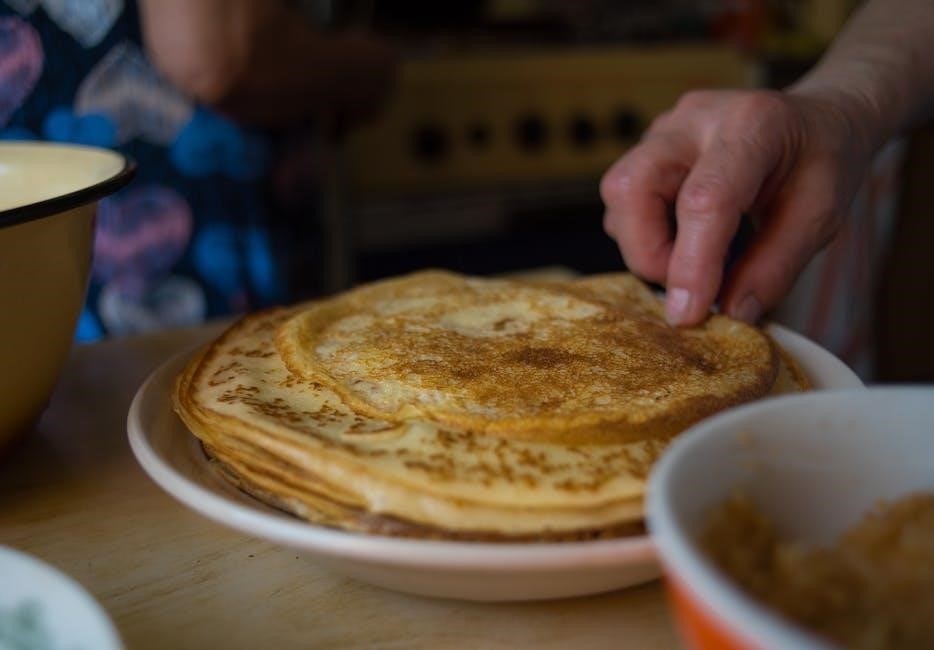
This document comprehensively outlines fundamental cooking techniques and essential kitchen equipment, detailing twelve common methods like baking and boiling.
What is the “Strip Down and Get Cooking” PDF?
The “Strip Down and Get Cooking” PDF serves as a practical guide, offering an overview of basic culinary methods and the necessary tools for successful food preparation. It’s designed to demystify cooking, presenting information in an accessible format for individuals seeking to improve their skills. The document details twelve distinct cooking techniques, ranging from foundational methods like baking and boiling to more specialized approaches.
Furthermore, it provides insights into utilizing kitchen appliances effectively, including specific guidance on components like glass trays and turntables, ensuring optimal performance during cooking processes. The PDF also touches upon advanced techniques such as sous vide, explaining its principles of precision cooking and temperature control.
Target Audience and Scope
This PDF is primarily intended for beginner cooks and those looking to solidify their foundational cooking knowledge. The scope encompasses a broad range of essential techniques, aiming to equip readers with the skills to confidently tackle various recipes. It’s particularly useful for individuals wanting a clear understanding of how different cooking methods impact food texture and flavor.
The document’s coverage extends beyond just techniques, including practical advice on kitchen equipment usage – specifically highlighting the importance of proper glass tray and turntable assembly for even cooking. It also briefly introduces advanced methods like sous vide, broadening the scope for those interested in exploring precision cooking. The resource aims for accessibility, offering a starting point for culinary exploration.
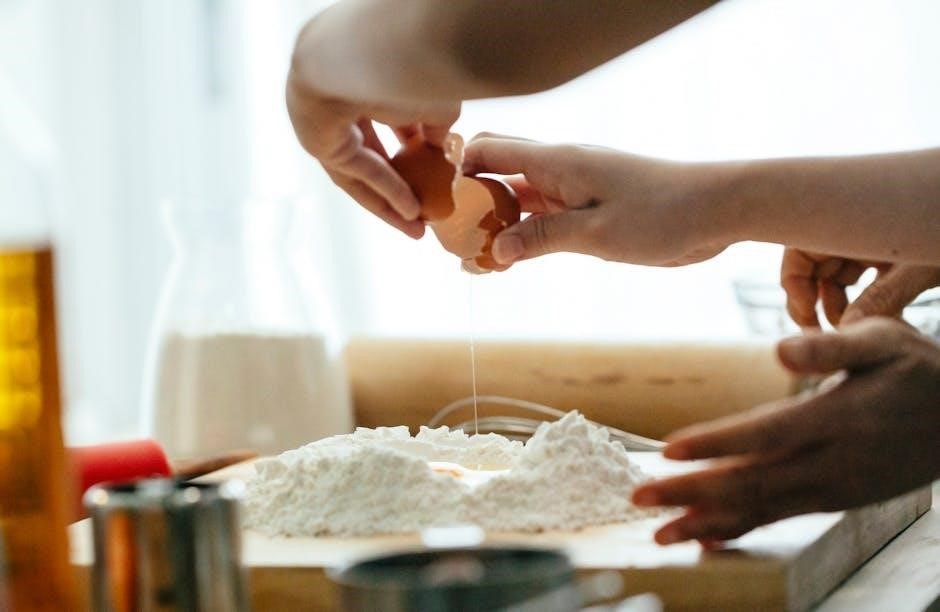
Basic Cooking Methods Covered
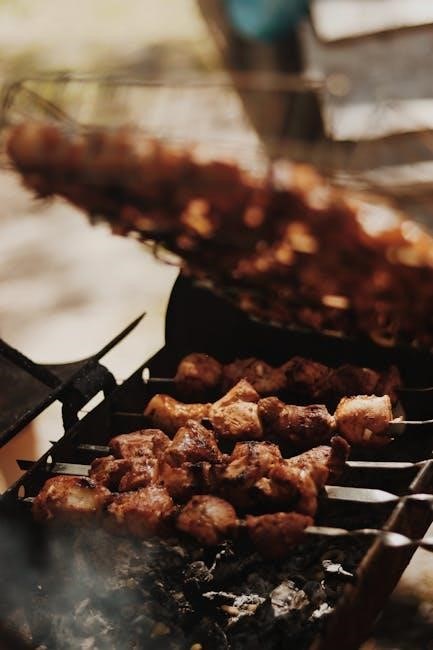
The PDF details twelve common cooking methods, including baking, boiling, roasting, and grilling, providing a foundational understanding of culinary techniques for all skill levels.
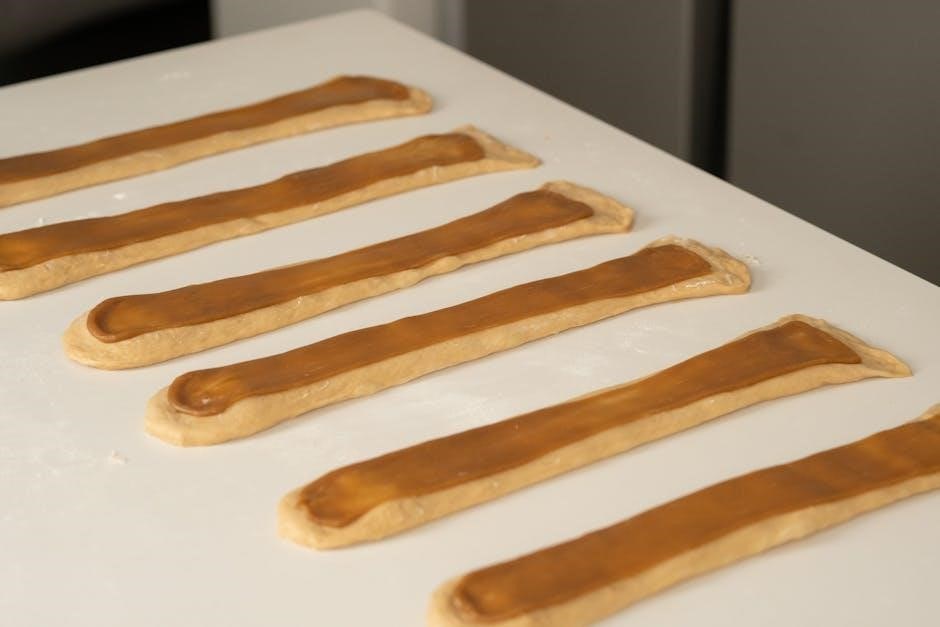
Baking Techniques Explained
The “Strip Down and Get Cooking” PDF provides a foundational overview of baking, crucial for achieving consistent results. It emphasizes the importance of precise measurements and understanding ingredient interactions. Proper oven temperature calibration is highlighted as a key factor, alongside techniques for even heat distribution.
The document implicitly stresses the necessity of utilizing appropriate bakeware, noting the role of glass trays and turntable rings in ensuring uniform cooking. It doesn’t delve into complex pastry work, but focuses on core baking principles applicable to a wide range of recipes. Understanding how different baking times and temperatures affect texture and rise is central to the guide’s approach. The PDF aims to demystify baking, making it accessible to beginners while reinforcing best practices for experienced cooks.
Boiling and Simmering Fundamentals
The “Strip Down and Get Cooking” PDF establishes a clear distinction between boiling and simmering, foundational techniques for countless dishes. It emphasizes that boiling involves vigorous bubbling, ideal for pasta and certain vegetables, while simmering utilizes gentle heat for tenderizing meats and developing complex flavors in sauces.
The guide implicitly highlights the importance of liquid-to-solid ratios for optimal results. While not explicitly detailed, the document’s overall focus on precision suggests careful attention to these proportions. Understanding how different cooking times impact texture is crucial, and the PDF likely touches upon this. Proper heat control is paramount, preventing scorching or uneven cooking. Mastering these fundamentals unlocks a vast repertoire of culinary possibilities, forming a cornerstone of basic cooking skills.
Understanding Roasting and Grilling
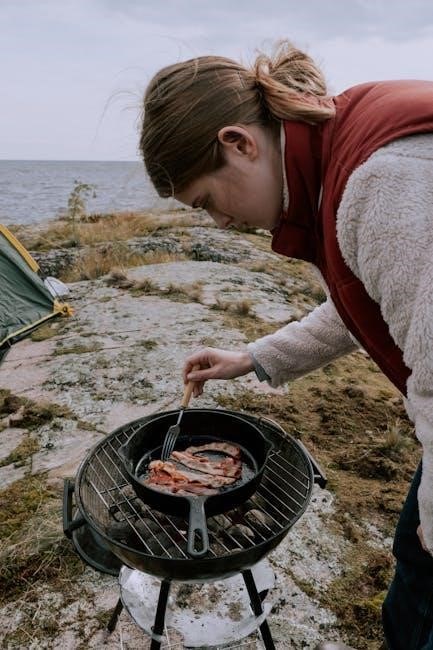
The “Strip Down and Get Cooking” PDF likely details roasting and grilling as dry-heat cooking methods, crucial for developing rich flavors and textures. Roasting, typically done in an oven, utilizes circulating hot air to cook food evenly, ideal for larger cuts of meat and vegetables. Grilling, conversely, employs direct, radiant heat, imparting a smoky char and distinct flavor profile.
The document probably emphasizes the importance of preheating for consistent results in both methods. Understanding Maillard reaction – the browning process – is key to achieving desirable flavors. While specifics aren’t provided, the PDF’s focus suggests attention to temperature control and appropriate cooking times for different food types. Proper preparation, like marinating, likely receives mention, enhancing both flavor and tenderness.
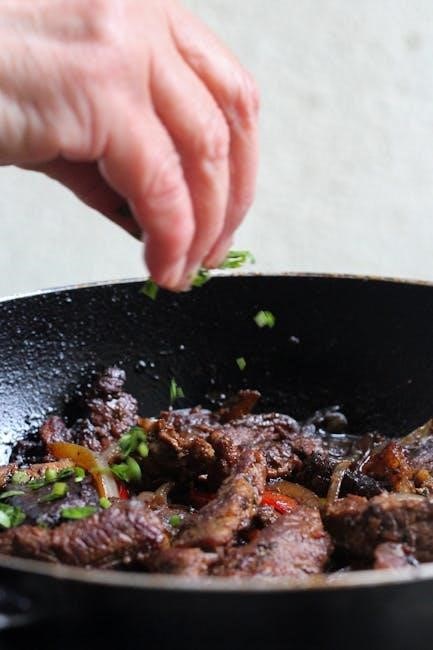
Kitchen Tools and Equipment
The PDF highlights essential tools for beginners, stressing the importance of utilizing both the glass tray and turntable ring during the cooking process.
Essential Tools for Beginners
Embarking on a culinary journey requires a foundational set of tools. This PDF emphasizes the significance of understanding how to properly utilize kitchen equipment for optimal results. Crucially, it details the necessity of always employing both the glass tray and the turntable ring assembly concurrently during cooking operations. Restricting the glass tray’s movement is strongly discouraged, as it impacts even cooking.
Beginners will find guidance on equipment like meat grinders, with specific instructions regarding cool-down periods – approximately 50-60 minutes – before reuse, extending if ambient temperatures are high. Proper appliance usage is paramount for safety and longevity, and the document underscores the importance of responsible packaging disposal and recycling practices, sorting materials like foil, cardboard, and polystyrene.
The Importance of Glass Trays and Turntables
The “Strip Down and Get Cooking” PDF highlights a critical aspect of microwave oven functionality: the inseparable pairing of the glass tray and turntable ring assembly. These components aren’t merely accessories; they are fundamental to achieving evenly cooked food. The document explicitly states that both must always be used simultaneously during the cooking process.
Restricting the glass tray’s rotation is strictly cautioned against, as it directly compromises the distribution of microwave energy. This leads to uneven heating and potentially undercooked areas. Ensuring free rotation guarantees consistent results. Proper use, as detailed in the PDF, is key to maximizing appliance performance and food safety, alongside responsible disposal of packaging materials.
Meat Grinder Usage and Cooling
The “Strip Down and Get Cooking” PDF addresses the safe and efficient operation of meat grinders, emphasizing a crucial cooling period after use. Overheating can damage the appliance and potentially pose a safety risk. The document specifies a recommended cool-down time of approximately 50-60 minutes before resuming operation.
However, it acknowledges that ambient room temperature significantly impacts cooling duration, advising a longer cool-down period if the surrounding environment is warm. This preventative measure ensures the grinder’s longevity and consistent performance. Ignoring this cooling phase could lead to malfunction. Proper maintenance, as outlined, is vital for sustained usability.
Advanced Cooking Techniques
The PDF explores sous vide, a precision cooking method involving slow-cooking vacuum-sealed food at accurately controlled, low temperatures for optimal results.
Sous Vide: Precision Cooking Explained
Also known as precision cooking, the sous vide method involves slowly cooking food that has been vacuum-sealed in a water bath. This technique maintains a remarkably consistent and accurately controlled temperature throughout the entire cooking process. The document details how this differs from traditional methods, offering superior results in texture and doneness.
Specifically, the PDF mentions a typical cooking time of 8 hours at a temperature of 35°C (95°F). It also notes the adjustable temperature range extends from 30°C to 80°C (86°F to 176°F), and the timer can be set for anywhere between 1 to 99 hours, providing flexibility for various recipes and ingredients. This controlled environment ensures even cooking and minimizes the risk of overcooking, leading to consistently delicious outcomes.
Temperature and Time Control in Sous Vide
The “Strip Down and Get Cooking” PDF emphasizes the critical role of precise temperature and time management in successful sous vide cooking. The system allows for temperature adjustments ranging from 30°C to 80°C (86°F to 176°F), catering to a wide variety of food types and desired levels of doneness. Similarly, the timer offers a broad spectrum of control, spanning from 1 to 99 hours, accommodating both quick and extended cooking durations.
An example provided illustrates a cooking time of 8 hours at 35°C. This level of control is key to achieving consistent results, as it eliminates temperature fluctuations inherent in traditional cooking methods. Proper adjustment of these parameters is crucial for optimal texture, flavor, and food safety, as detailed within the document’s guidelines.

Safety and Maintenance
The PDF stresses proper appliance usage, cooling down before reuse, and responsible packaging disposal, including sorting materials like foil and cardboard for recycling.
Proper Usage of Kitchen Appliances
The “Strip Down and Get Cooking” PDF emphasizes safe operation of all kitchen appliances. Regarding the meat grinder, it’s crucial to allow sufficient cooling time – approximately 50 to 60 minutes – before restarting after use. This cooling period may need extension depending on the ambient room temperature.
Furthermore, the document highlights the importance of correct component usage with microwave ovens. Specifically, the glass tray must rotate freely without restriction, and both the glass tray and the turntable ring assembly are mandatory during the cooking process. These guidelines ensure optimal performance and prevent potential damage to the appliance. Adhering to these instructions promotes both safety and longevity of your kitchen tools.
Cooling Down Appliances Before Reuse
A critical safety aspect detailed in the “Strip Down and Get Cooking” PDF is allowing appliances to cool adequately before reuse. This is particularly vital for the meat grinder, where operating the device while still warm can cause damage or pose a safety hazard. The document specifically recommends a cooling period of 50-60 minutes post-operation.
However, it acknowledges that higher room temperatures may necessitate a longer cooling duration. Rushing this process can compromise the appliance’s functionality and potentially lead to overheating. Prioritizing cool-down time ensures safe and efficient operation, extending the lifespan of your kitchen equipment and preventing unexpected malfunctions. Always prioritize safety before resuming use.

Packaging Disposal and Recycling
The “Strip Down and Get Cooking” PDF emphasizes responsible packaging disposal, urging users not to discard appliance packaging with general waste. Instead, it advocates for sorting packaging materials – including foil, cardboard, and polystyrene – for appropriate recycling. This commitment to environmental consciousness minimizes landfill waste and promotes sustainable practices.
Properly segregating these materials ensures they can be processed and repurposed, reducing the demand for virgin resources. Following local recycling guidelines is crucial for effective waste management. By adhering to these recommendations, users contribute to a healthier planet while demonstrating responsible consumer behavior, aligning with broader sustainability goals.
Resources and Further Learning
Related language learning materials, such as a practical English course for pedagogical universities, can supplement culinary skills development and broaden understanding.
Related Language Learning Materials
Enhancing language proficiency alongside culinary skills is invaluable, particularly for non-native English speakers navigating recipes and cooking instructions. Resources like a two-course practical English program, designed for pedagogical institutions specializing in foreign languages, offer a structured approach to language acquisition. This course, authored by L.I. Selyanina, L.G. Lyubimova, and edited by V.D. Arakin, provides a solid foundation in English grammar and vocabulary.
Furthermore, access to assessment tools for language proficiency is crucial for tracking progress and identifying areas for improvement. Understanding linguistic theory of translation, as covered in specialized courses, can also aid in deciphering complex culinary terminology. These supplementary materials will empower individuals to confidently explore and execute recipes, fostering a more enjoyable and successful cooking experience.
Assessment Tools for Language Proficiency
Evaluating English language skills is paramount when utilizing resources like the “Strip Down and Get Cooking” PDF, especially for those for whom English isn’t their first language. The foundation for such evaluation is often built upon departmental working programs and associated assessment funds, as established by foreign language departments within educational institutions. These funds support the creation and implementation of tools designed to measure comprehension and application of language skills.
Effective assessment goes beyond simple translation; it requires understanding nuanced culinary terminology and the ability to follow complex instructions. Utilizing standardized tests, quizzes focused on recipe comprehension, and practical cooking challenges can provide a holistic view of an individual’s proficiency. Regular assessment ensures continuous improvement and builds confidence in the kitchen.