Water Fountain Manual: Comprehensive Guide
This manual provides facility managers with essential troubleshooting, maintenance, and configuration details for Oasis and Elkay water coolers, fountains, and bottle fillers.
Water fountains are ubiquitous fixtures in public spaces, offering convenient hydration. Modern units extend beyond basic drinking fountains, now frequently incorporating bottle fillers and advanced filtration systems. Proper maintenance is crucial for hygiene and longevity. This guide caters to facility managers responsible for Oasis and Elkay models, detailing troubleshooting, cleaning, and component replacement. Understanding your specific model number unlocks access to detailed manufacturer documentation. Regular upkeep ensures consistent, safe, and refreshing water access for all users, preventing costly repairs and downtime.
Types of Water Fountains
Water fountains broadly fall into indoor and outdoor categories, each with unique considerations. Indoor fountains prioritize aesthetics and often feature recirculating designs. Outdoor models require robust construction to withstand weather elements. Further classification includes wall-mounted units, ideal for space saving, and freestanding fountains offering greater design flexibility. Some Oasis coolers boast heavy-gauge stainless steel construction. Bi-level units provide accessibility for diverse users and can be reconfigured. Selecting the appropriate type depends on location, usage, and desired functionality.
Indoor Water Fountains
Indoor water fountains are typically chosen for their aesthetic appeal and contribution to interior design. These units often utilize recirculating systems, requiring regular cleaning to maintain hygiene and prevent algae growth. They are commonly found in offices, schools, and public spaces, offering convenient hydration. Models range from simple, bubbler-style fountains to more elaborate, multi-tiered designs. Proper maintenance, including daily cleaning, is crucial for optimal performance and water quality.
Outdoor Water Fountains

Outdoor water fountains are designed to withstand varying weather conditions and increased usage. Constructed often from heavy-gauge stainless steel, they require robust cleaning schedules to combat debris and environmental contaminants. These fountains frequently feature vandal-resistant components and freeze protection. Regular inspection for leaks and damage is essential, alongside consistent water filtration. Maintaining optimal functionality necessitates diligent upkeep, ensuring a safe and refreshing hydration source for public areas and parks.
Wall-Mounted vs. Freestanding
Wall-mounted fountains conserve space and are ideal for high-traffic areas, offering a hygienic drinking solution. Freestanding fountains provide design flexibility and can be placed anywhere with access to plumbing and electricity. Installation differs significantly; wall-mounted units require secure mounting, while freestanding models need a level surface. Consider accessibility, maintenance access, and aesthetic preferences when choosing. Both types benefit from regular cleaning and filter replacements to ensure optimal water quality and longevity.
Understanding Your Water Fountain Model
Accurate model identification is crucial for accessing the correct documentation and replacement parts. Locate the model number, typically found on a sticker affixed to the unit’s housing or within the access panels. Once identified, access the manufacturer’s documentation – often available online through Oasis or Elkay’s websites. This documentation provides specific maintenance schedules, troubleshooting guides, and parts lists tailored to your particular fountain model, ensuring proper care and repair.
Locating the Model Number
Finding your water cooler’s model number is the first step towards effective maintenance. Typically, a sticker containing this information is located on the unit’s exterior, often within an access panel or on the back. Carefully inspect the housing, paying attention to areas near the power cord or water connections. This number is essential for downloading specific manuals, ordering replacement parts, and accessing targeted troubleshooting advice from the manufacturer, Oasis or Elkay.
Accessing the Manufacturer’s Documentation
Once you’ve located the model number, accessing the manufacturer’s documentation is straightforward. Both Oasis and Elkay provide extensive resources online. Visit their official websites and utilize the search function, entering your specific model number. You’ll find detailed manuals, parts lists, troubleshooting guides, and even instructional videos. These resources are invaluable for understanding your fountain’s operation, performing maintenance, and resolving common issues effectively, ensuring longevity and optimal performance.
Routine Maintenance & Cleaning
Consistent maintenance is crucial for hygienic operation and extending the lifespan of your water fountain. Elkay recommends continuous cleaning, with frequency depending on usage, location, and water quality. Daily procedures include wiping down surfaces. Weekly deep cleaning involves sanitizing the basin and nozzle; Following manufacturer guidelines, like Elkay’s recommendations, prevents buildup and ensures consistently fresh, clean water for all users, promoting health and safety within your facility.
Daily Cleaning Procedures

To maintain optimal hygiene, daily cleaning should focus on frequently touched surfaces. Wipe down the fountain basin, nozzle, and surrounding areas with a mild, food-safe sanitizer. Pay close attention to the push buttons or levers used for operation. Regularly remove any visible debris or splashes. This simple routine prevents bacterial growth and ensures a consistently clean drinking experience for users, contributing to a healthier environment and minimizing potential health risks.
Weekly Deep Cleaning
A thorough weekly cleaning is crucial for long-term fountain health. Disassemble removable parts like the basin and nozzle for individual washing with warm, soapy water. Sanitize all components, ensuring complete rinsing to remove residue. Inspect and clean the drain area to prevent blockages. For Elkay units, follow their specific recommendations for stainless steel surfaces. This deep clean eliminates accumulated grime, inhibits mold growth, and preserves the fountain’s functionality and aesthetic appeal, ensuring safe hydration.
Elkay Water Cooler Cleaning Recommendations
Elkay emphasizes continuous cleaning for optimal performance. Frequency depends on usage, location, and water quality. Regularly wipe down stainless steel surfaces with a mild detergent and soft cloth to prevent water spots. For deeper cleaning, Elkay suggests using their specific stainless steel cleaners. Pay close attention to the basin and nozzle, removing any mineral buildup. Consistent cleaning maintains hygiene, extends the cooler’s lifespan, and ensures consistently fresh and safe drinking water for all users.
Troubleshooting Common Issues
Addressing problems quickly ensures continued operation. Common issues include a fountain not working – first check the power source and water supply. Low water flow often indicates a blocked pump; inspect for obstructions. Leaks require immediate attention to prevent water damage. This section provides step-by-step procedures and tool lists for ten frequent problems, including blocked pumps and leaking pipes, offering DIY repair guidance and links to necessary replacement parts.
Fountain Not Working: Power & Water Source Check
Initial troubleshooting for a non-functional fountain begins with verifying the power supply. Ensure the unit is plugged in and the outlet is active. Next, confirm the water source valve is fully open, allowing water flow to the fountain. A basic inspection of these two elements often resolves the issue. If problems persist, proceed to examine the pump and other components for malfunctions.
Low Water Flow or Blocked Pump
Reduced water flow frequently indicates a blockage within the pump or tubing. Begin by disconnecting power and accessing the pump chamber, often located beneath a removable rock topping. Inspect the tubing for kinks or disconnections, reattaching as needed. Carefully check the pump itself; ensure the impeller isn’t obstructed by debris. A running motor with no water suggests a significant blockage requiring further investigation.
Leaks and Water Damage
Persistent leaks demand immediate attention to prevent water damage. Inspect all connections – tubing, the water control cartridge, and the fountain basin – for looseness or cracks. A leaking pipe may require tightening or component replacement. If the leak originates within the unit, disconnect the power supply and investigate the pump or reservoir. Address leaks promptly to avoid costly repairs and potential hazards.
Component Replacement
Regular component replacement ensures optimal fountain performance. This includes the water control cartridge (specifically for Oasis models), the Watersentry filter in Elkay units, and the water pump impeller. Replacing worn parts proactively prevents malfunctions and maintains water quality. Detailed instructions and video tutorials are available for each process, alongside links to purchase compatible accessories. Prioritize safety by disconnecting power before any component replacement procedure.
Replacing the Water Control Cartridge (Oasis Models)
To replace the Oasis water control cartridge, begin by shutting off the water supply and disconnecting the unit’s power. Access the cartridge housing, typically located within the fountain’s control assembly. Carefully remove the old cartridge, noting its orientation for correct installation of the new one. Ensure a secure fit of the replacement cartridge, then restore water and power. Verify proper operation and check for any leaks post-replacement.
Replacing the Watersentry Filter (Elkay Models)
For Elkay models featuring a Watersentry filter, begin by turning off the water supply to the cooler. Locate the filter housing, usually accessible via a panel or compartment. Unscrew the housing and remove the old filter, noting its position. Install the new Watersentry filter, ensuring it’s properly seated. Reassemble the housing, restore the water supply, and then reset the filter status indicator on the unit to reflect the replacement.
Water Pump Impeller Replacement
If experiencing low water flow, the pump impeller may need replacing. First, disconnect power to the fountain. Access the pump, often located within the reservoir, and carefully disassemble it. Remove the old impeller, noting its orientation. Install the new impeller, ensuring it’s securely fitted onto the pump shaft. Reassemble the pump, restore power, and test the fountain’s water flow. Consider purchasing a compatible impeller for a seamless repair.
Advanced Troubleshooting & Resetting
For malfunctioning electric bottle fillers, a reset may be required. Consult the manufacturer’s documentation for specific reset procedures, as these vary by model. Some Oasis units feature reset functionalities to address operational errors. Additionally, Elkay units often require filter status resets after replacement. These resets ensure accurate filter life monitoring. Proper resetting restores functionality and maintains optimal performance, preventing unnecessary service calls and ensuring continued access to filtered water.
Resetting Malfunctioning Electric Bottle Fillers
When electric bottle fillers malfunction, a reset is often the first step. Procedures differ between manufacturers; Oasis and Elkay have unique methods. Typically, this involves a sequence of button presses or a power cycle. Refer to the unit’s specific manual for detailed instructions. A successful reset restores functionality, resolving issues like continuous filling or sensor errors. Always disconnect power before attempting any reset procedure for safety.
Filter Status Reset (Elkay Units)
Elkay water coolers feature filter status indicators requiring periodic resetting after replacement. This ensures accurate monitoring of filter lifespan. The reset process usually involves pressing and holding a designated button on the unit for a specific duration, often indicated by a light change. Consult your Elkay model’s documentation for precise steps, as procedures vary. Resetting confirms filter replacement and restores accurate usage tracking for optimal water quality.
Water Quality & Filtration
Maintaining excellent water quality is paramount with any fountain system. Effective filtration removes impurities, ensuring safe and refreshing hydration. Regular filter replacement is crucial, with frequency dependent on usage, location, and incoming water quality. Elkay recommends continuous cleaning alongside filter changes. Filtration safeguards against contaminants, improving taste and protecting user health. Prioritizing filtration demonstrates a commitment to providing a reliable and hygienic drinking water source.
Importance of Water Filtration
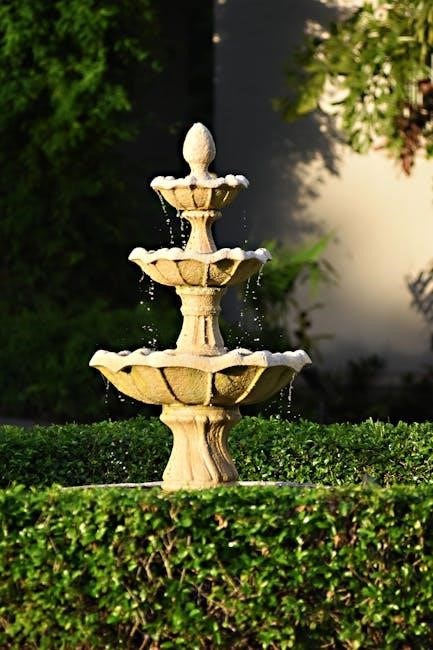
Water filtration is absolutely essential for delivering safe, clean drinking water. It actively removes sediments, chlorine, and other contaminants that impact taste and potentially pose health risks. High-quality filters enhance water clarity and odor, encouraging increased hydration. Consistent filtration protects the fountain’s internal components from damage caused by mineral buildup. Prioritizing filtration demonstrates a commitment to public health and ensures a consistently refreshing drinking experience for all users.
Filter Replacement Frequency
Elkay recommends continuous cleaning and regular filter changes for optimal performance. The frequency depends on factors like fountain usage, location, and incoming water quality. Generally, Watersentry filters should be replaced every six months, or sooner with high traffic. Monitor water flow and taste; diminished quality signals a need for replacement. Consistent filter changes prevent contaminant buildup, ensuring consistently clean and safe drinking water, and prolonging the fountain’s lifespan.
Configuration & Adjustments
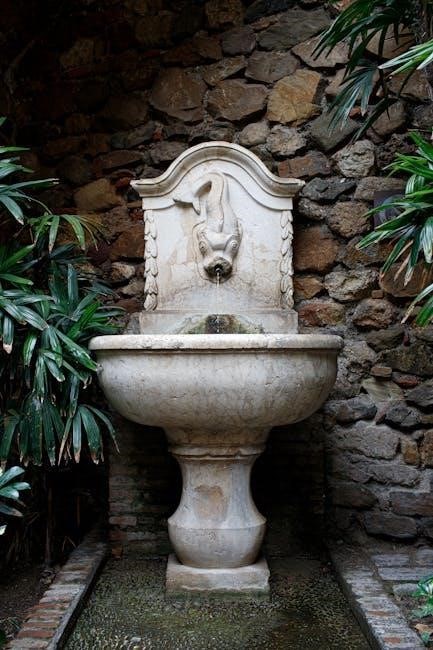
Oasis water coolers offer configuration flexibility, particularly bi-level units which can be adapted with minor adjustments to suit different needs. Stream height is also adjustable, allowing customization for user preference and splash reduction. Understanding these options maximizes the fountain’s utility. Proper configuration ensures optimal water flow and accessibility. Regularly check and adjust settings to maintain peak performance and user satisfaction, adapting to changing environmental conditions or usage patterns.
Adjusting Fountain Stream Height
To adjust the stream height on your Oasis fountain, locate the adjustment mechanism, typically near the fountain head or valve assembly. Carefully modify the setting to achieve the desired water arc and flow rate. Lower settings minimize splashing, ideal for high-traffic areas, while higher settings provide a more robust stream. Regularly assess and readjust as needed, considering user feedback and environmental factors. Ensure adjustments don’t compromise water containment or create excessive noise.

Bi-Level Unit Configuration Options
Many Oasis bi-level fountains offer adaptable configurations. These units can be adjusted to prioritize either the drinking fountain or the bottle filler based on facility needs. Simple internal changes allow you to dedicate more water pressure to one function over the other. Consider user demographics and traffic patterns when configuring. Prioritize the bottle filler in eco-conscious environments, or the fountain in areas with frequent direct drinking. Document any changes made for future reference and maintenance.
Safety Precautions
Prioritize electrical safety when servicing water fountains; always disconnect power before any maintenance. Ensure proper grounding and inspect cords for damage. Maintain strict water hygiene – regular cleaning prevents bacterial growth. Avoid harsh chemicals that could contaminate the water supply. Be mindful of pinch points during component replacement. Follow manufacturer guidelines for filter changes to prevent waterborne illnesses. Report any electrical issues or significant leaks immediately to qualified personnel for repair.
Electrical Safety
Always disconnect the power supply before performing any maintenance or repairs on the water fountain. Inspect power cords regularly for fraying or damage, replacing them immediately if issues are found. Ensure proper grounding to prevent electrical shock. Avoid working with electrical components when hands or the surrounding area are wet. If unsure about electrical work, consult a qualified electrician. Never bypass safety features or attempt unauthorized modifications to the electrical system.
Water Hygiene
Maintaining pristine water quality is crucial for public health. Regularly clean and disinfect all water contact surfaces, following manufacturer’s guidelines. Implement a scheduled filter replacement program to remove contaminants. Encourage users to avoid touching the fountain spout with their mouths. Address leaks promptly to prevent bacterial growth and water damage. Consider installing splash guards to minimize water dispersal and potential contamination. Consistent cleaning, as Elkay recommends, is paramount;