Cuisinart Egg Cooker Instruction Manual: A Comprehensive Guide
Navigating the world of perfectly cooked eggs becomes effortless with this guide. Discover how to unlock your Cuisinart egg cooker’s potential‚ from initial setup to mastering various cooking styles.
Understanding Your Cuisinart Egg Cooker
Your Cuisinart egg cooker is a versatile kitchen appliance designed to simplify the process of cooking eggs to your desired consistency. Unlike traditional stovetop methods‚ this cooker utilizes steam technology to ensure even cooking and prevent overcooking or cracking. It’s capable of preparing not just hard-boiled and soft-boiled eggs‚ but also poached eggs‚ omelets‚ and even small frittatas‚ expanding your breakfast and brunch possibilities.
The core principle revolves around controlled steam. Water is heated to create steam‚ which then cooks the eggs gently and evenly. The amount of water used directly correlates to the desired doneness – more water for harder yolks‚ less for softer. Understanding this relationship is key to mastering the appliance. Different models may feature varying settings and capacities‚ so familiarizing yourself with your specific model’s features is crucial.
Beyond basic egg cooking‚ some Cuisinart egg cookers include accessories for poaching or making omelets. These additions broaden the cooker’s functionality‚ allowing for greater culinary experimentation. The appliance’s compact design also makes it a convenient addition to any kitchen‚ taking up minimal counter space. Proper understanding of these features will unlock the full potential of your Cuisinart egg cooker.
Unboxing and Component Identification
Upon opening your Cuisinart egg cooker package‚ carefully inspect the contents to ensure all components are present and undamaged. Typically‚ you’ll find the egg cooker base‚ which houses the heating element and water reservoir. A steaming tray or rack is included‚ designed to hold the eggs above the water level‚ preventing direct contact and ensuring even cooking.
A measuring cup‚ often marked with water level indicators for different egg doneness levels‚ is a standard inclusion. Some models also feature a poaching tray‚ allowing for the preparation of perfectly poached eggs. Additionally‚ an omelet/frittata disc may be present‚ enabling the creation of individual egg dishes. The power cord should also be included.
Refer to the included parts diagram in your instruction manual to visually identify each component. It’s crucial to familiarize yourself with each part’s function before first use. Check for any shipping damage‚ such as cracks or dents‚ and contact Cuisinart customer support if any issues are detected. Retain the packaging for potential warranty claims or returns. Proper identification ensures correct assembly and operation of your new appliance.
Safety Precautions and Important Warnings
To ensure safe operation of your Cuisinart egg cooker‚ always adhere to these crucial safety guidelines. Never immerse the base of the unit in water or any other liquid‚ as this poses a severe electric shock hazard. Always unplug the appliance when not in use and before cleaning. Allow the unit to cool completely before disassembly or cleaning.
Exercise extreme caution when handling hot steam emitted during and after the cooking process. Avoid touching the steaming tray or any internal components immediately after use‚ as they will be extremely hot; Keep the appliance out of reach of children. Supervise its use by individuals unfamiliar with its operation.
Do not operate the egg cooker with a damaged cord or plug‚ or after it has malfunctioned. If the appliance exhibits any signs of damage‚ discontinue use and contact Cuisinart customer support for assistance. Only use the egg cooker for its intended purpose – cooking eggs. Misuse may result in injury or damage. Ensure proper ventilation during operation. Never cover the appliance while it’s in use.
Getting Started: First-Time Use
Begin your egg-cooking journey by familiarizing yourself with the cooker. A quick test run‚ without eggs‚ helps understand the steaming process and ensures everything functions correctly before use.
Initial Cleaning and Preparation
Before your inaugural egg-cooking session‚ thorough cleaning is paramount. Carefully unpack your Cuisinart egg cooker and remove all packaging materials. Begin by wiping down the exterior with a soft‚ damp cloth. Avoid abrasive cleaners‚ as they can potentially damage the finish.
Next‚ focus on the removable parts. The egg tray‚ poaching tray‚ and measuring cup are typically dishwasher safe – consult your specific model’s instruction booklet to confirm. If handwashing‚ use warm‚ soapy water and a non-abrasive sponge. Ensure all soap residue is completely rinsed away.
The heating plate within the cooker requires gentle cleaning. A damp cloth is sufficient; never immerse the base unit in water. Stubborn residue can be loosened with a paste of baking soda and water‚ applied carefully and wiped clean.
Preparation is key. Before the first use‚ it’s recommended to run the cooker with water only‚ following the instructions for hard-boiled eggs‚ but without any eggs inside. This helps eliminate any manufacturing residue and prepares the unit for optimal performance. This initial cycle ensures a fresh start for your culinary adventures.
Finally‚ ensure the ventilation holes are clear of any obstructions. Proper airflow is crucial for safe and efficient operation. A clean cooker is a happy cooker‚ ready to deliver perfectly cooked eggs every time!
Water Level Guide for Desired Doneness
Achieving your ideal egg consistency hinges on precise water measurement. The Cuisinart egg cooker utilizes the included measuring cup to determine the water level‚ directly correlating to the final doneness of your eggs. This guide provides a clear roadmap to egg perfection.
For soft-boiled eggs with a runny yolk‚ use the lowest water level marking on the measuring cup – typically around 60-80ml. This yields a delicate‚ dippable yolk‚ perfect for toast soldiers. A slightly higher level‚ around 80-100ml‚ will result in a softer‚ but less runny‚ yolk.
Medium-boiled eggs‚ offering a partially set yolk‚ require a mid-range water level‚ generally between 100-120ml. This provides a balance between a creamy center and a firm white.
To create hard-boiled eggs with a fully cooked yolk and white‚ utilize the maximum water level indicated on the measuring cup – usually around 140-160ml. This ensures a consistent‚ firm texture‚ ideal for salads or deviled eggs.
Remember‚ these are guidelines. Egg size and personal preference can influence the outcome. Experimenting with slight adjustments to the water level will help you discover your perfect egg. Always refer to your model’s specific instructions for precise measurements and optimal results. Consistent water measurement is the cornerstone of consistent egg cooking.
Powering On and Basic Operation
Initiating the cooking process with your Cuisinart egg cooker is remarkably straightforward. Begin by ensuring the cooker is placed on a stable‚ level surface and plugged into a grounded electrical outlet. The power button‚ typically located on the front panel‚ activates the appliance.

Once powered on‚ select your desired cooking method using the designated control dial or buttons. Options commonly include settings for soft‚ medium‚ and hard-boiled eggs‚ as well as poaching and omelet preparation. The selected setting illuminates‚ confirming your choice.
Next‚ carefully add the measured water (refer to the Water Level Guide) into the cooker’s base. Insert the egg tray‚ ensuring it’s securely positioned. Place the eggs into the designated slots on the tray – avoid overcrowding for even cooking.
Close the lid firmly. The cooker will automatically begin the heating process. A signal‚ often an audible beep or a light indicator‚ will alert you when the cooking cycle is complete.
Immediately after the signal‚ unplug the cooker and carefully remove the lid‚ being mindful of escaping steam. Utilize tongs or a slotted spoon to gently remove the cooked eggs and promptly place them in an ice bath to halt the cooking process and facilitate easy peeling.
Cooking Methods: Mastering Egg Perfection
Explore diverse egg preparations! This section details techniques for consistently achieving ideal results – from flawlessly hard-boiled eggs to delicate poached creations and versatile omelets.
Hard-Boiled Eggs: Achieving Consistent Results
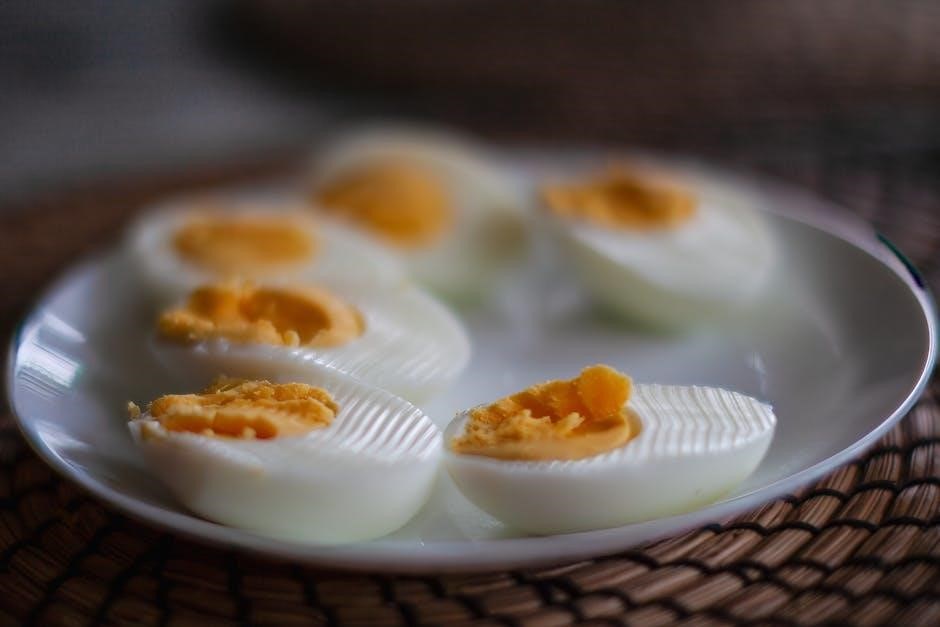
Mastering the art of the hard-boiled egg with your Cuisinart egg cooker is surprisingly simple. The key lies in precise water measurement and understanding your cooker’s settings. Begin by carefully placing the desired number of eggs onto the cooking tray.
Next‚ use the included measuring cup to add water according to the markings on the cooker’s base. These markings correspond to different levels of doneness – for hard-boiled eggs‚ typically the ‘6’ or ‘7’ marking is recommended‚ but experimentation may be needed to suit your preference.
Secure the lid tightly‚ ensuring it’s properly locked into place. Power on the cooker and allow it to run through the cycle. The automatic shut-off feature eliminates the guesswork‚ preventing overcooking. Once the cycle completes‚ immediately transfer the eggs to an ice bath.
This rapid cooling halts the cooking process and makes peeling significantly easier. Allow the eggs to cool completely in the ice water before attempting to peel. For consistently perfect‚ evenly cooked hard-boiled eggs‚ this method is unparalleled. Remember to consult your specific model’s instruction booklet for tailored guidance.
Soft-Boiled Eggs: Runny Yolk Mastery
Achieving that perfect runny yolk is a culinary delight‚ and your Cuisinart egg cooker makes it attainable with ease. Soft-boiled eggs require a more delicate approach to water levels than their hard-boiled counterparts. Begin by arranging your eggs on the cooking tray‚ ensuring they are not overcrowded.
Utilize the measuring cup to add water‚ referencing the markings on the cooker’s base. For a classic runny yolk‚ the ‘4’ or ‘5’ marking is generally ideal‚ though personal preference dictates the final amount. Less water equates to a runnier yolk‚ while more yields a firmer consistency.
Secure the lid firmly and initiate the cooking cycle. The cooker’s automatic shut-off prevents overcooking‚ a crucial factor in soft-boiled egg perfection. Upon cycle completion‚ immediately plunge the eggs into an ice bath to halt the cooking process;
This rapid cooling is essential for preventing the yolk from solidifying further. Gently crack the eggs and serve immediately‚ enjoying the luxurious‚ flowing yolk. Experiment with water levels to discover your ideal level of runniness. Always refer to your model’s manual for specific recommendations.
Poached Eggs: A Delicate Approach
Poaching eggs can seem daunting‚ but your Cuisinart egg cooker simplifies this classic technique. The key lies in gentle cooking and maintaining the egg’s delicate structure. Begin by ensuring the poaching tray is securely in place within the cooker.

Add the recommended amount of water‚ typically indicated by the ‘poach’ line on the cooker’s base. A small amount of vinegar – about a teaspoon – can be added to the water to help the egg whites coagulate‚ creating a neater shape. However‚ this is optional.
Carefully crack each egg into a small ramekin or cup before gently sliding it into the poaching tray. Avoid overcrowding; cook in batches if necessary. Secure the lid and initiate the poaching cycle. The cooker will automatically regulate the temperature and cooking time.
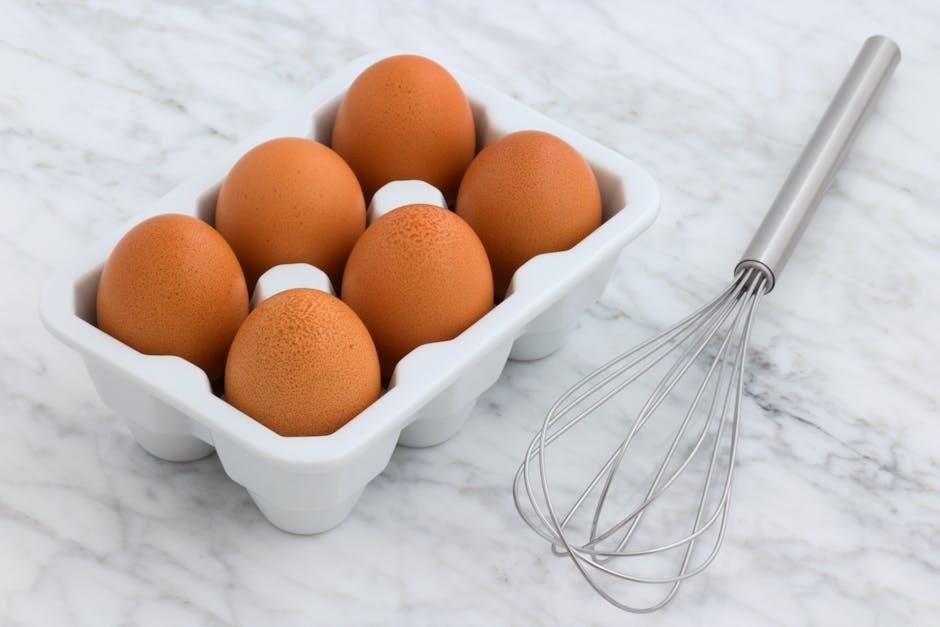
Once the cycle completes‚ carefully remove the poached eggs with a slotted spoon. Pat them gently with a paper towel to remove excess water. Serve immediately on toast‚ with avocado‚ or as part of Eggs Benedict. Experiment with cooking times for desired yolk consistency.

Omelets and Frittatas: Expanding Your Culinary Horizons
Beyond simple boiled eggs‚ your Cuisinart egg cooker unlocks the potential for creating delightful omelets and frittatas. While not a traditional omelet maker‚ it provides a convenient base for pre-prepared mixtures. The key is to pre-whisk your eggs with desired fillings – cheese‚ vegetables‚ meats – in a separate bowl.
Lightly grease the omelet/frittata disc included with your cooker. Pour the egg mixture onto the disc‚ ensuring it’s evenly distributed. Secure the disc into the cooker and select the appropriate setting. Typically‚ a setting similar to ‘soft-boiled’ or a dedicated ‘omelet’ function works best‚ but experimentation is encouraged.
The cooker will gently steam and set the egg mixture. Cooking times will vary depending on the thickness and ingredients. Once complete‚ carefully remove the disc. For a fully cooked frittata‚ allow it to cool slightly before slicing. For a softer omelet‚ serve immediately.
Remember‚ the Cuisinart egg cooker excels at cooking the egg base; pre-preparation of fillings is crucial for optimal results. Enjoy exploring diverse flavor combinations and expanding your breakfast repertoire!

Cleaning and Maintenance
Maintaining your Cuisinart egg cooker is simple. Disassemble components after each use‚ washing them with warm‚ soapy water. Ensure all parts are thoroughly dried before reassembly and storage.
Disassembly and Washing Instructions
Before commencing cleaning‚ always ensure the Cuisinart egg cooker is unplugged and completely cool. Disassembly is straightforward: carefully remove the egg tray‚ the measuring cup with the poaching tray‚ and the base cover. These components are typically dishwasher safe (top rack recommended) for convenient cleaning. However‚ hand washing is also perfectly acceptable‚ using warm‚ soapy water.
For hand washing‚ gently scrub each part to remove any egg residue. Pay particular attention to the tiny holes in the egg tray and poaching tray‚ ensuring they are free from blockage. A soft brush or sponge can be helpful for this. Avoid using abrasive cleaners or scouring pads‚ as these may damage the non-stick coating or plastic components.
The heating plate within the base should be wiped clean with a damp cloth. Never immerse the base in water or any other liquid. Stubborn residue can be loosened with a paste of baking soda and water‚ applied gently and wiped away. Rinse all components thoroughly with clean water and allow them to air dry completely before reassembling the egg cooker. Proper drying prevents mildew and ensures optimal performance.
Regular cleaning after each use will prolong the life of your Cuisinart egg cooker and maintain its hygienic operation.
Troubleshooting Common Issues
If your Cuisinart egg cooker isn’t powering on‚ first verify the power cord is securely plugged into both the cooker and a functioning outlet. Check your circuit breaker or fuse box to rule out a power supply issue. If the unit still doesn’t respond‚ contact customer support.
For eggs that are undercooked or overcooked‚ double-check the water level used corresponds to your desired doneness‚ referencing the water level guide. Variations in egg size can also affect cooking times; adjust accordingly. Ensure the measuring cup is filled accurately.
If eggs are cracking during cooking‚ it could be due to thermal shock. Try gently lowering the egg tray into the cooker instead of dropping it. Also‚ ensure eggs aren’t excessively cold when placed in the cooker. A small pinhole in the large end of the egg can help prevent cracking.
Should you encounter difficulty with the auto-shutoff function‚ ensure the water level hasn’t evaporated completely during the cooking cycle. If problems persist‚ a professional repair may be necessary. Never attempt to disassemble or repair the unit yourself.
Storage Recommendations
To ensure the longevity of your Cuisinart egg cooker‚ proper storage is crucial. Before storing‚ always confirm the unit is completely cool and dry. Disconnect the power cord and store it loosely‚ avoiding tight bends or kinks that could damage the wiring.
The cooker itself should be stored in a cool‚ dry place‚ away from direct sunlight and extreme temperatures. Avoid storing it in damp environments like basements or near sinks‚ as moisture can lead to corrosion. A clean‚ indoor cupboard or pantry is ideal.

Store the egg tray‚ poaching tray‚ and measuring cup inside the cooker body to keep all components together and prevent loss. If storing for an extended period‚ consider placing a desiccant packet inside to absorb any residual moisture.
Regularly inspect the power cord for any signs of damage‚ such as fraying or cracking. If damage is detected‚ discontinue use and contact Cuisinart customer support for a replacement. Never store the cooker with a damaged cord. Proper care will maintain optimal performance.